The Transiting Exoplanet Survey Satellite has detected its first exoplanet by gravitational microlensing, per the discovery team's July 1, 2026 announcement. The planet, designated Gaia23bra b, is a super-Jupiter orbiting its host star roughly 40,000 light-years from Earth, in a regime the transit-hunting satellite was never designed to probe. The catch demonstrates that one spacecraft's data can serve detection methods its builders never planned for.
How does microlensing differ from TESS's usual method?
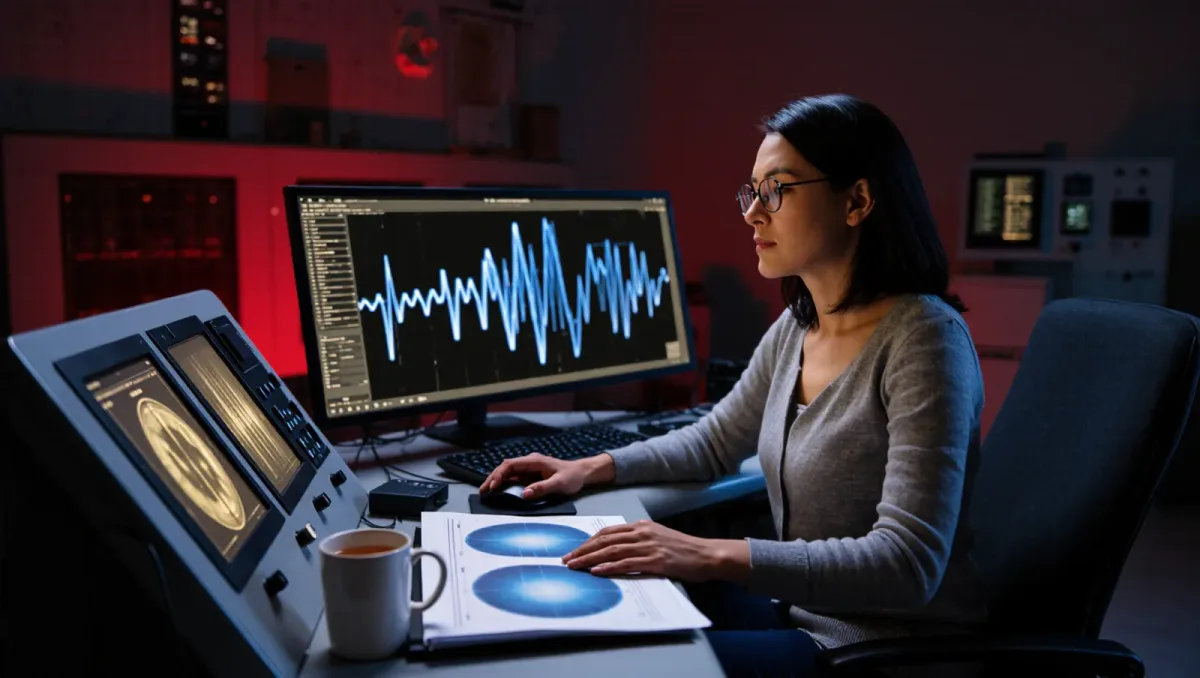
TESS finds planets by transits: it stares at nearby stars, watching for the millisecond-per-hour dimming that occurs when a planet crosses the star's face. Microlensing works on completely different physics. When a foreground star drifts almost directly in front of a background star, the foreground star's gravity bends the background star's light and magnifies it for days or weeks. If the foreground star carries a planet, the planet's own gravity adds a brief spike to the magnification curve. The method reaches far deeper into the galaxy than transits can — including toward the galactic bulge, where Gaia23bra b sits — but each event happens once and never repeats.
Why look for planets this way?
Microlensing is the only technique sensitive to planets at separations of several astronomical units around distant, dim hosts — the sweet spot where our own solar system's giants orbit — and it can find worlds too faint for any other method. The trade-off is permanence: transit and radial-velocity planets can be re-observed indefinitely, while a microlensing event is a one-time measurement whose interpretation depends entirely on models of the alignment. That makes confirmation harder and contested results more common than in transit science.
What makes the TESS detection notable?
Volume and serendipity. TESS monitors hundreds of millions of stars continuously, so its archive happens to contain microlensing events toward the galactic bulge that no dedicated survey flagged. Combing that archive extends the satellite's scientific reach at zero additional cost — the same archival-mining logic that produced unexpected results from Kepler's data. The super-Jupiter's mass and separation, per the team, place it in a population microlensing surveys predicted but that remains sparsely sampled by any method.
What would confirm the finding?
Microlensing events cannot be re-run, so confirmation takes a different form: high-resolution follow-up imaging to characterize the lens and source stars, and consistency checks between the light curve and the lens-system model. Independent reanalysis of the same photometry by other groups is the field's standard adversarial step. The broader test is statistical — if TESS's full archive yields a population of microlensing planets, the galaxy's distant cold giants move from inference to census, one never-repeating event at a time.