What does a working day inside a research institute actually look like? The honest answer: far less bench science and far more reading, writing, meetings and administration than most people imagine. A researcher's day is shaped less by experiments than by deadlines, email and the slow work of turning evidence into a paper.
It is also shaped by the clock itself. According to Wikipedia's entry on the day, a day is the period of one full rotation of the Earth relative to the Sun, averaging 24 hours, or 86,400 seconds — and that daily cycle drives circadian rhythms in many organisms. Research life runs on the same rhythm, though not always on the same schedule as the rest of the working world.
This explainer follows the shape of a typical day at a large, multidisciplinary institute — not one named building, but the pattern repeated across thousands of them. The picture is drawn from how research work is organised, not from a single diary, so treat it as a map rather than a memoir.
What happens in the morning at a research institute?
Mornings belong to deep work. Many researchers guard the first hours of the day for the tasks that need concentration: reading new papers, analysing data, or writing. Writing is the bottleneck of research. A study is not finished when the data is collected; it is finished when the manuscript is clear enough to survive scrutiny.
That scrutiny has a name and a cost. Before work is published, it passes through peer review, the system in which other researchers judge a paper's methods and claims. That system runs largely on unpaid labour, a burden examined in Peer Review Runs on Free Labor — and the Bill Is Enormous. The same unpaid effort shapes the researcher's morning in another way: reviewing other people's manuscripts is work squeezed into the edges of the day.
Mid-morning, the institute fills with talk. Coffee corridors and group meetings are where much real science happens — a result is questioned, a flaw is spotted, a next step is suggested. A junior researcher may spend the morning preparing a slide that will be picked apart for twenty minutes by the rest of the lab. That is not wasted time. It is how error is caught early.
Where does the actual research fit into the day?
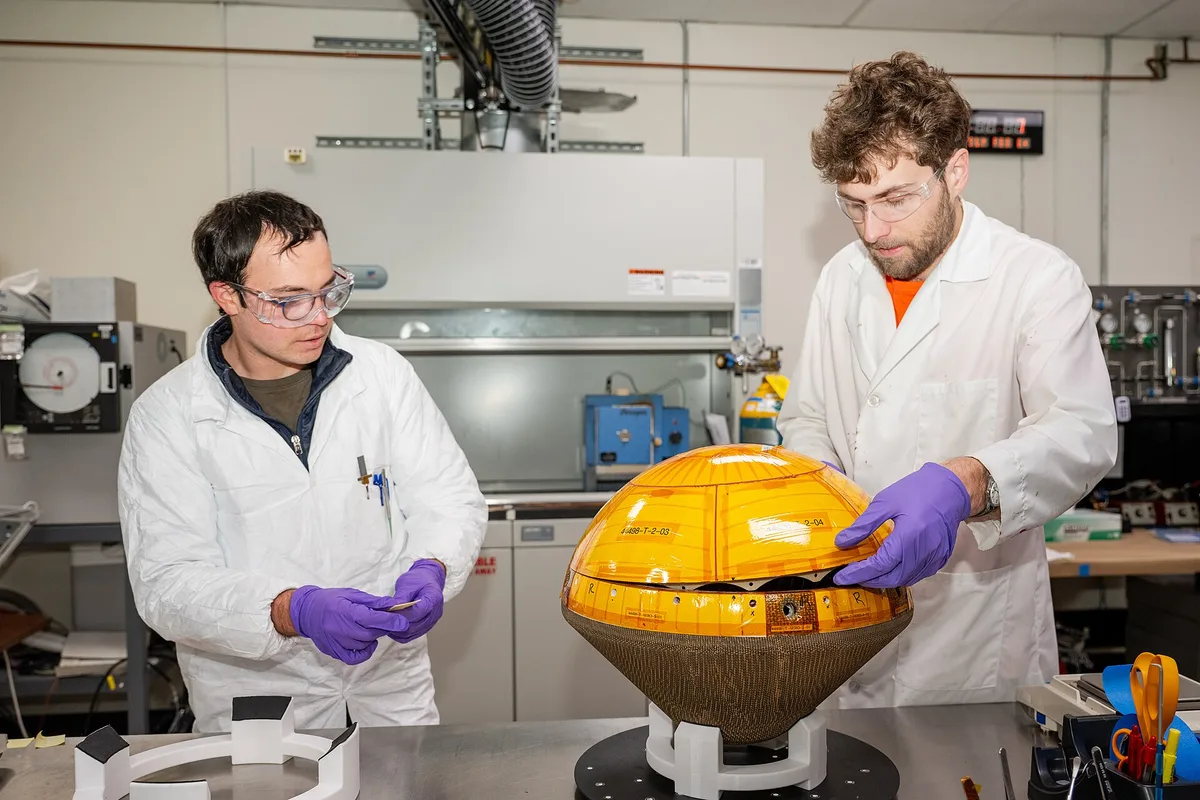
It depends on the field. A laboratory scientist's day is anchored to the experiment: cell cultures need feeding on fixed schedules, instruments run for hours, and some measurements simply cannot wait. An observational astronomer may work nights, since the telescope does not care about the civil clock. A computational researcher can run analyses at any hour, which is both a freedom and a trap — there is always one more test to run.
A day, defined strictly, is the interval between one midnight and the next, and institute life mostly respects it. But the work refuses clean boundaries. A researcher who leaves at six often reopens the dataset at nine, because a nagging doubt about a statistical choice does not observe office hours. The day is 86,400 seconds; the job is not.
How much of the day goes to paperwork and money?
More than outsiders expect, and often more than researchers would like. Modern research is funded by grants, and grants must be written, budgeted, justified and reported. Preparing a single major application can consume days or weeks of a senior researcher's time, a process traced step by step in How an NSF Grant Actually Gets Made, Step by Step. The money behind the building — heating, equipment, administrative staff — is itself a subject of political fight, as coverage of NIH indirect costs and the 15% cap fight shows.
Then there is the human machinery. Hiring committees, ethics approvals, safety training, seminar scheduling, expense claims. A research institute is a small city, and someone must keep its streets swept. Much of that someone is the researchers themselves, layered on top of the science.
Who is in the building, and how do their days differ?
An institute is layered, and the layers live different days.
- Principal investigators — the lab leaders — spend their hours on strategy, grant writing, mentoring and correspondence. Many do little hands-on science at all.
- Postdoctoral researchers hold doctorates and work on fixed-term contracts, carrying much of the day-to-day research. Their employment situation is precarious enough to have earned its own name, the postdoc squeeze, covered in The Postdoc Squeeze: Years of Expertise, Priced Below the Market.
- Graduate students split the day between their own project, coursework and teaching. Their working conditions have increasingly become bargaining conditions, as explained in Grad Unions, Explained: How a Student Becomes an Employee Who Bargains.
- Technicians and core-facility staff keep instruments running and train others to use them — essential work that rarely appears on a paper's author list.
The same building, the same lunchroom, four or five different jobs with different security, pay and hours. That two-tier structure extends to the faculty itself, where tenure-track and adjunct positions sit side by side on very different terms.
What does an ordinary day actually accomplish?
On a good day: one paragraph written well, one dataset checked, one student's problem untangled, one review submitted. That does not sound like much. Compounded over months, it is how a result moves from a hunch to a published, checkable claim that others can build on.
On a bad day, the day is consumed by the machinery: a rejected grant, a broken instrument, a meeting that should have been an email. Researchers speak of such days with a particular flatness. The work is long-term, and the daily feedback is thin.
Our analysis: why the daily texture of research matters
The daily texture of research explains something important about science as an institution. Because progress is made in small, unglamorous daily increments, the conditions of those increments — stable funding, fair contracts, time to think — are not perks. They are the production environment of knowledge itself. When those conditions fray, the effect is not dramatic; it is a slow tax on every one of those 86,400 seconds.
It also explains why research can look slow from the outside. A day that produces one careful paragraph is a day that produces something that will not need to be retracted later. In a field where trust is the currency, slow is often the point.
What a day in a research institute finally tells us
A research institute is not a place where discoveries are made on schedule. It is a place where, most days, people read, measure, argue, write and apply for money — and where, occasionally, one of those days changes what humanity knows. The daily cycle, from morning's first coffee to the last experiment set running overnight, is the unremarkable container for the remarkable. What remains unknown to any visitor is which ordinary day will turn out to have been the important one.