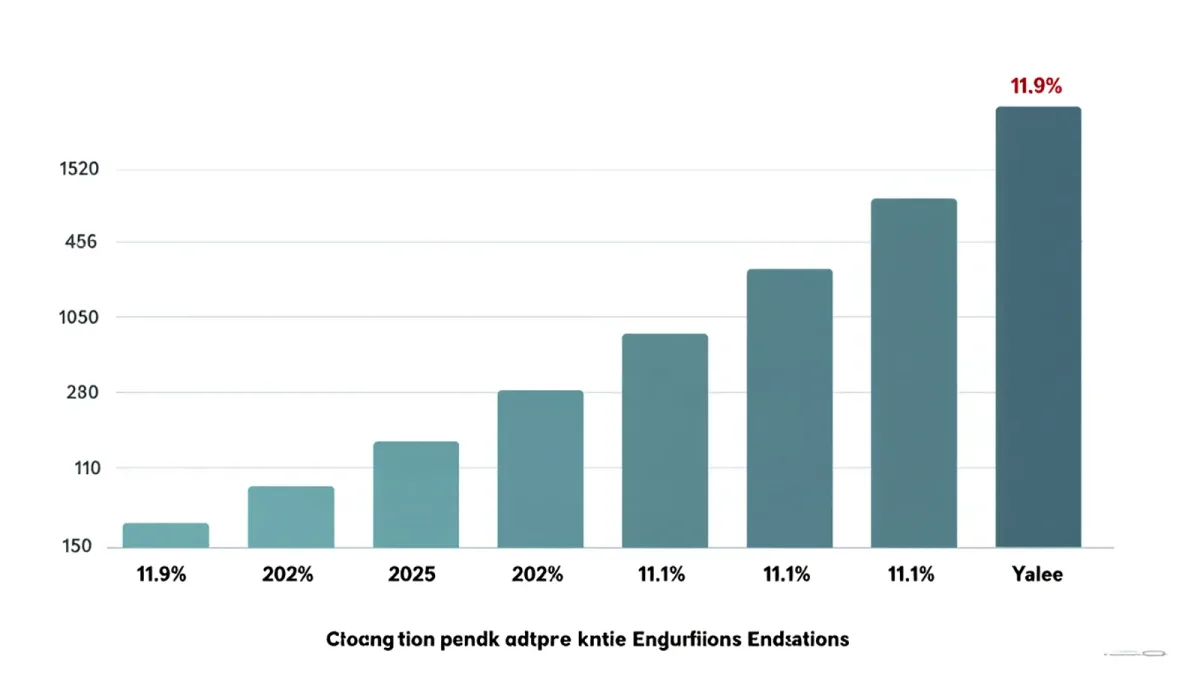
Harvard's endowment returned 11.9% in fiscal year 2025, per Harvard Financial Administration, pushing the fund to $56.9 billion as of June 30, 2025 and beating the university's 8% benchmark. Yale reported an 11.1% return net of fees, roughly $4.5 billion in investment gains, per YaleNews on October 24, 2025. All eight Ivy League institutions have now released fiscal 2025 results, and several posted double-digit gains, per a Forbes comparison published November 2, 2025.
Endowment returns are investment performance, not spendable cash: schools draw a payout, typically 4% to 5%, and the rest stays invested.
What drove the fiscal 2025 gains?
Per Harvard's report, private equity and hedge fund positions led the year. The distribution side matters as much as the return: Harvard's endowment distributed $2.5 billion in fiscal 2025, contributing more than a third of the university's operating revenue. Yale's endowment grew by roughly $2.4 billion overall after payout, per YaleNews, because new gifts and gains outpaced spending. Returns of this size do not recur every year; fiscal 2022 losses are the recent reminder that endowments follow markets in both directions.
Why does the endowment tax change the picture?
Under the 2025 tax law, the federal excise tax on large endowments rises to 8% of net investment income starting July 1, 2026, up from the 1.4% rate set in 2017, with a lower threshold pulling more institutions into scope. Per reporting in the Yale Daily News, Yale does not plan to fully offset the tax through additional endowment spending, which means the cost lands on the operating budget. Universities have warned the levy could reduce funds available for financial aid and research.
What should readers watch next?
Fiscal 2026 results, due in autumn 2026, will be the first reported under the higher tax, and they will show whether institutions absorb the cost or cut spending. The second thing to watch is dispersion: a year in which every Ivy cleared double digits says more about market conditions than about any single investment office. The number that would change the debate is a sustained stretch of sub-payout returns, which would force the endowment payout question that most universities have so far avoided.