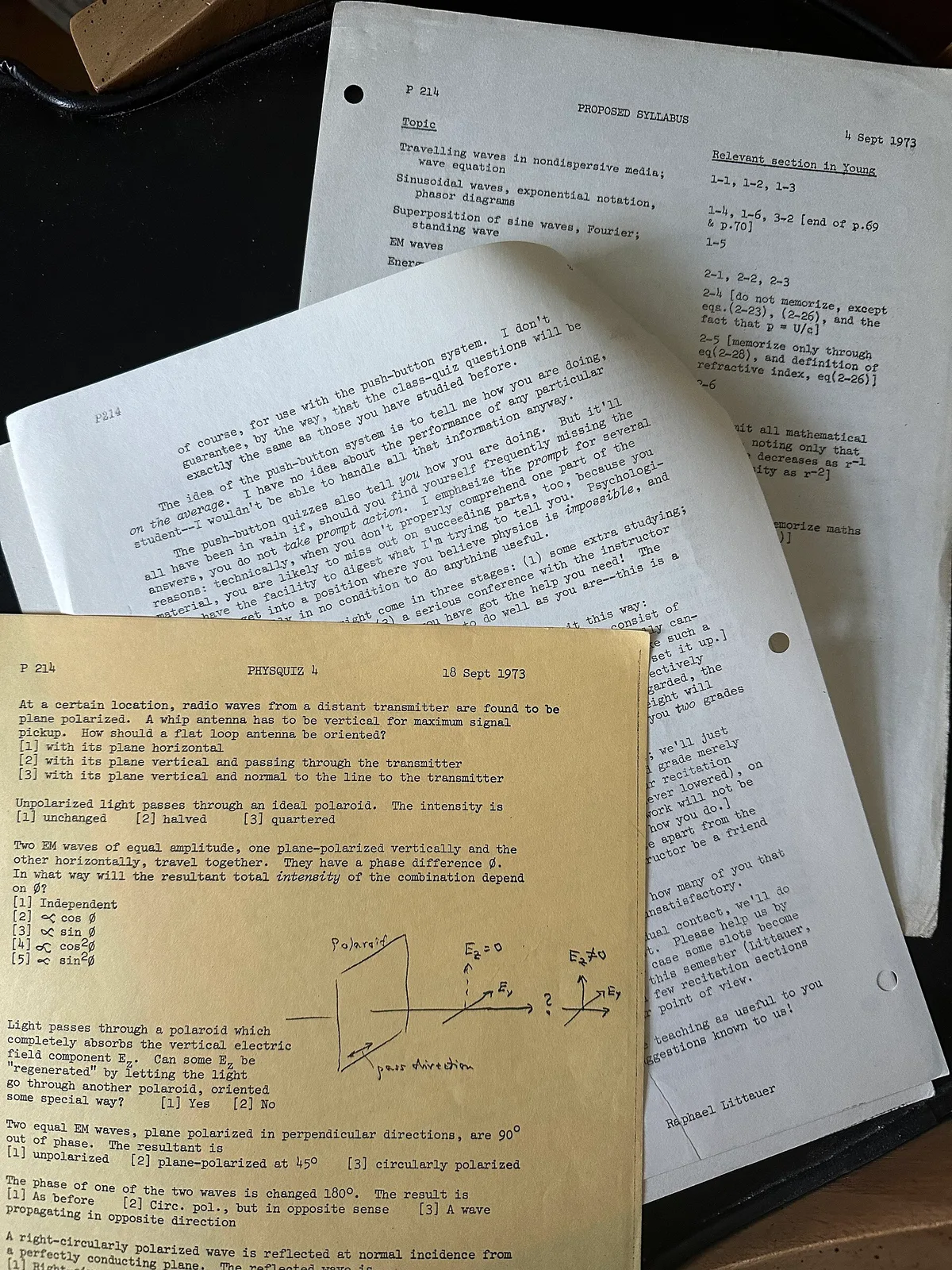
Every course hands you a paper on day one. Most students skim it, note the grade scale, and forget the rest. Researchers do the opposite. They read a syllabus the way they read any text that makes promises. They read closely, and they ask what each line commits someone to do.
This habit pays off all term. The fine print tells you what the teacher values, how work will be judged, and where the traps sit. Here is how to do it.
What a Syllabus Actually Is
A syllabus is a paper that shares key facts about a course. It sets out what is expected, and from whom, as Wikipedia's syllabus entry explains. It gives a view of the whole course plan. Teachers usually hand it out in the first class. Many courses also keep a copy online all term.
That makes it more than a list of dates. It is the closest thing a course has to a public record of its own rules. Readers following this should also see Federal Student Loan Rules Changed on July 1: What Borrowers Face Now.
Even the word has a tale. Per the dictionary account on Wikipedia, the term comes from modern Latin for a list. That word was itself a misreading of a Greek word for a parchment label. It reached print in a 15th-century run of Cicero's letters. A document born from a print error now runs the modern class.
The Contract Worth Noticing
Two scholars of teaching named this role. In 2005, Slattery and Carlson called the syllabus a contract between teacher and students. It answers their questions about the course. It also states what happens if they fail to meet its terms. A third writer, Habanek, called it a vehicle for showing duty and commitment. Both views appear in the same entry.
Read that way, each line binds someone. A late-work line tells you when points stop counting. An attendance line tells you what showing up means. Vague lines bind no one. That vagueness is a signal too.
Read the Goals Like a Methods Section
Start with the course goals. Strong goals use action verbs: identify, analyze, evaluate. Weak ones lean on passive verbs: learn, know, grasp. The scholars who called the syllabus a contract pushed for this shift. A close reader can feel the difference at once. This connects to our earlier piece, NYU's 950 Contract Faculty Struck for Two Days and Won a First Contract.
Action verbs tell you what you will be asked to do, and so how you will be tested. A goal that says analyze promises tests that ask for analysis. A goal that says understand leaves the bar unclear. Ask about it in week one.
The Fine Print That Deserves a Second Pass
After the goals, read the rules as you would read the methods part of a paper.
- Grade weights, which show what the course really values, not just what it says.
- Late work and makeup rules, which define what happens when plans fail.
- Office hours and contact rules, which show how help is given.
- Honesty rules, which set the lines the teacher will enforce.
None of these lines is filler. Together they form the duty side of the contract. They tell you who must do what, and by when.
One more habit helps. Bring the paper to the first office hours you can attend. Ask about any line that seems vague. Most teachers welcome the chance to state their terms in plain words. That talk turns a vague line into a clear one, and it puts a name to a face early in the term.
Conclusion
Reading a syllabus like a researcher means asking one thing of each line. What does this commit, and to whom? The paper sets out duties for both sides of the course. Its goals predict the grades. Its rules set the bounds. Its vague spots mark where you should ask first. Do that close read once, and the syllabus stops being paperwork. It becomes the map of the term ahead.