A paper can be done long before it is in print. Journal review often takes weeks, months, or even years. To share results sooner, many researchers post early copies of their papers online. These early copies are called preprints. The sites that host them are preprint servers.
Preprints change how science moves. They let authors claim credit fast, gather notes, and reach readers at once. They also raise hard questions about quality control. This piece explains what preprint servers are, and what they mean for peer review.
What a Preprint Is
In academic publishing, a preprint is a version of a paper that comes before formal review and journal printing, as Wikipedia's preprint entry explains. It is usually a free, plain file. A paper that has passed review but is not yet typeset is a postprint. The two together are known as e-prints.
Posting a preprint does not usually block journal printing. Per the same source, most publishers allow work to appear on these servers first. A few decide case by case. A handful read the Ingelfinger Rule so strictly that an early post disqualifies the paper.
How the Servers Work
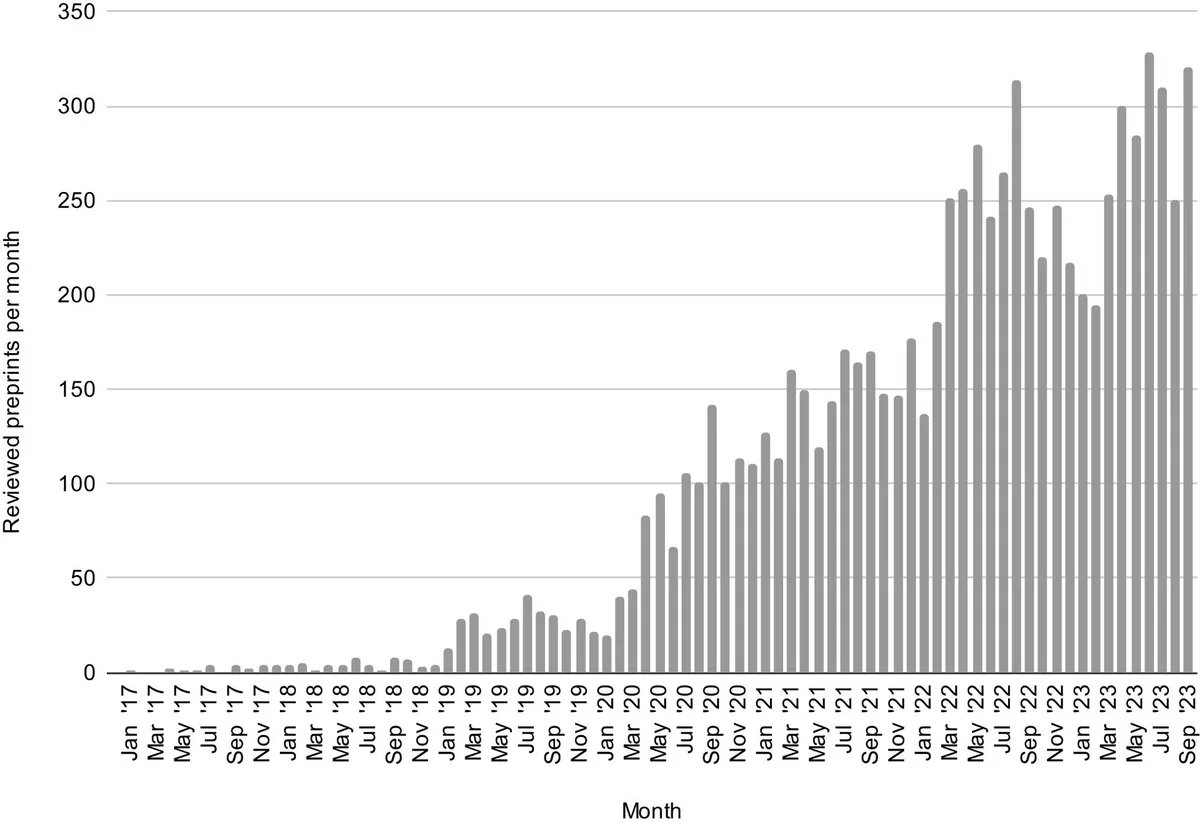
These servers came with the open web. arXiv, the oldest and best known, began on August 14, 1991. It has since grown past two million papers. As of late 2024 it took in about 24,000 new posts a month, per Wikipedia's arXiv entry. It covers math, physics, computing, and nearby fields.
Servers differ in scope. Some are broad. Some serve one field, like bioRxiv for biology or ChemRxiv for chemistry. Some serve one region, like AfricArxiv or Arabixiv. Most share one trait: a light check, but no review. arXiv screens each post, yet it does not peer review. So posting is fast, and the duty to be right stays with the author.
What This Means for Peer Review
Preprints do not replace review. They run beside it. A posted paper can still go through journal review later. In math, some landmark results have shown up only as preprints. Grigori Perelman posted his proof of the Poincare conjecture on arXiv in 2002 and 2003. He later turned down both the Fields Medal and the million-dollar prize that came with it, per Wikipedia's article on preprints.
Review itself is changing too. Wikipedia notes services that review preprints on their own, such as Review Commons, eLife Preprint Review, and Peer Community In. Funders moved as well. In 2017, the Medical Research Council began to count preprints in grant bids, and the Wellcome Trust did the same. Readers following this should also see How to Read a Preprint: Evaluating Research Before Peer Review.
The old order flips here. In the past, review came first and the public read later. Now the public can read first, and review catches up. That shift puts new weight on the reader, who must judge how much trust a draft deserves.
Limits and Cautions
Readers must recall what a preprint is. No peer expert has checked it. Errors and bold claims can slip through. Many journals still urge writers not to cite preprints, since they are not seen as fully proven sources. For the same reason, a preprint adds little to a case for tenure unless it later becomes a printed paper.
Authors face choices too. An early post can lock in credit. It can also make mistakes public. Once a flawed copy is out, fixes may spread more slowly than the error did.
Conclusion
Preprint servers sit between the lab notebook and the journal. They trade the slow seal of review for speed, openness, and fast notes. For readers, the rule is simple. Treat preprints as promising but not proven. For authors, they are a way to share work fast while the formal checks go on. Peer review is not going away. It now shares the stage with a quick, public first draft of science. This connects to our earlier piece, Preprints Are Not Unpublished Results. But They Are Not Proven Either..