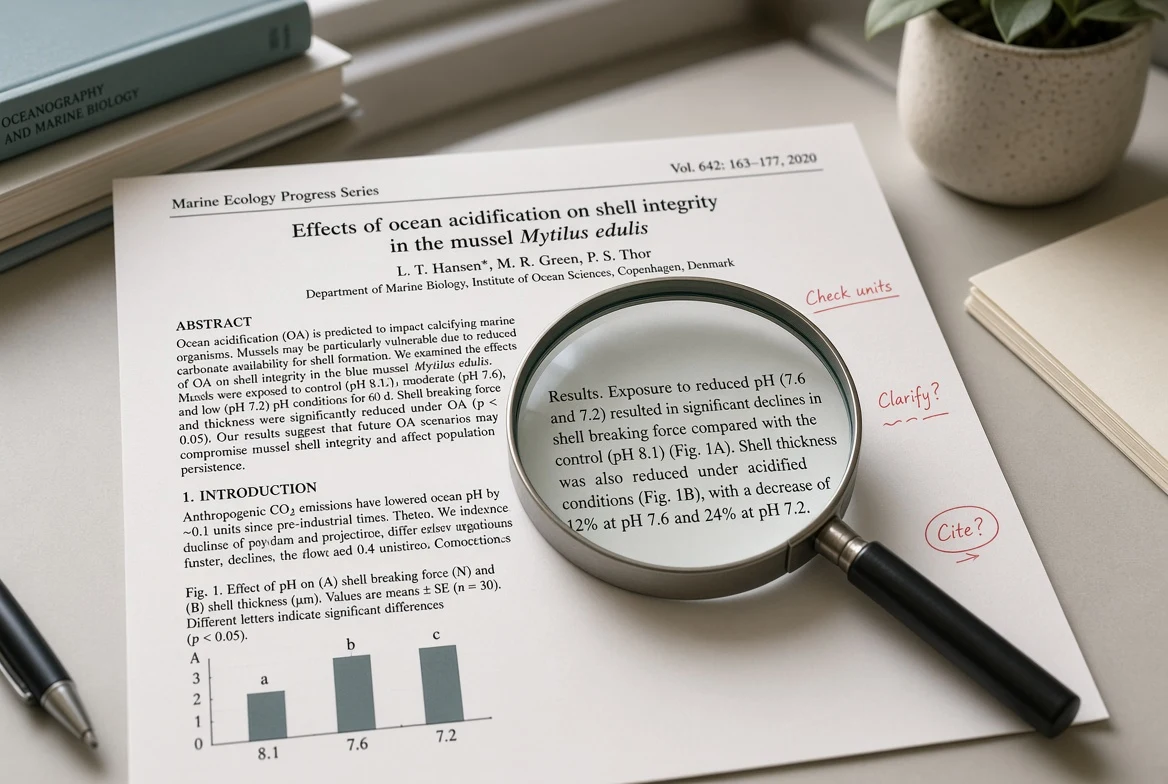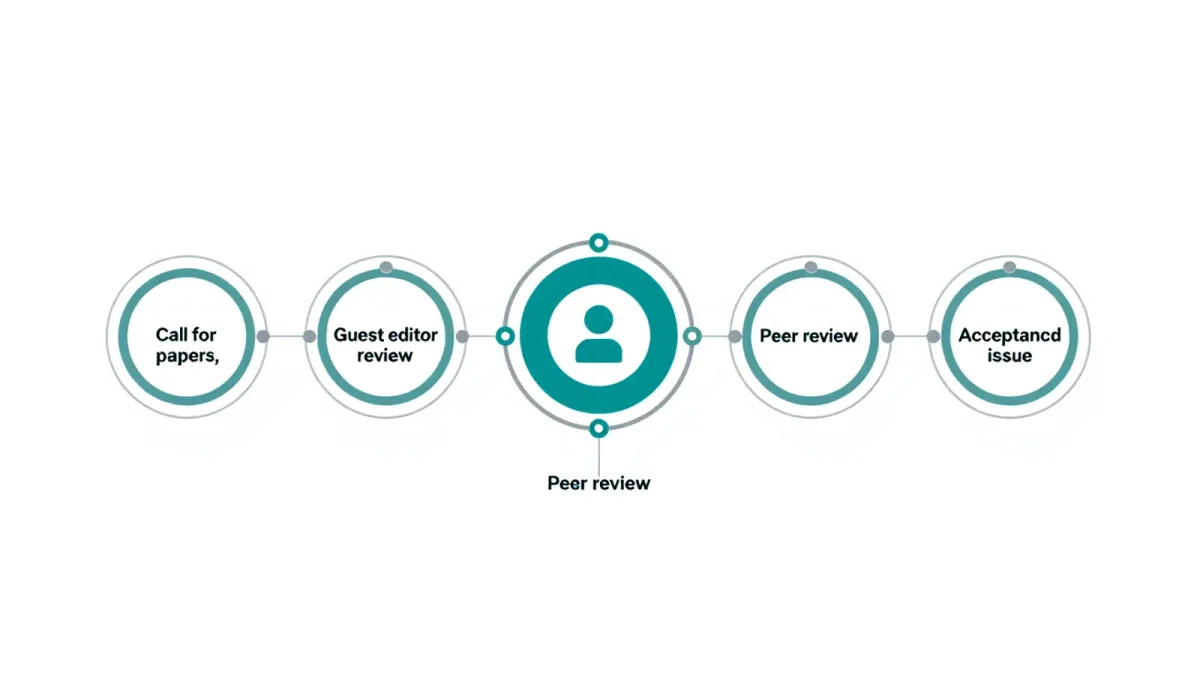
Double-blind peer review hides the names of authors from the people judging their paper, and hides reviewers from authors. In theory, a manuscript competes on evidence alone: a submission from a first-year PhD student should stand or fall beside one from a Nobel laureate. In practice, blinding is a partial shield — useful, imperfect, and increasingly tested by preprints and searchable text. As of 2024, an analysis of journal policies found that while most medical journals claim double-blind review, several major outlets, including many in physics and mathematics, deliberately keep single-blind review, where reviewers know the authors but not the reverse.
This is an explainer, not advice on choosing a venue; journals set their own policies and authors should read them directly.
What exactly gets hidden, and from whom?
In a double-blind setup, the editorial office strips identifying material before the manuscript reaches reviewers: author names, affiliations, funding acknowledgments, and sometimes self-citations written in the first person. Reviewers are typically anonymous to authors, though some journals now offer open reviewer reports signed by name — a model popularized in the 2010s and now standard at several major outlets.
Single-blind review, still the default in much of science, lets reviewers judge a submission knowing who wrote it. Proponents argue that knowing the group behind a paper helps reviewers assess whether the work has the expertise and resources behind it. Critics counter that it invites the very biases blinding was designed to remove.
What does the evidence say about bias?
The best-known natural experiment comes from the economics field: a study of the American Economic Review's move to double-blind review, published by the journal itself, found a marked rise in publications from authors outside the top-ranked US departments after blinding took effect. Earlier trials in behavioral ecology and medicine reported mixed results, partly because blinding is hard to maintain and sample sizes are small. The honest summary: blinding appears to shift outcomes measurably in some fields, and no rigorous study has shown it harms manuscript quality.
Biases that blinding addresses are well documented outside publishing. Research on grant and manuscript review has repeatedly found in-group preference — reviewers rate work from people they know, or from prestigious institutions, more favorably. Gender and nationality effects appear in some analyses and not others, which is itself a lesson: one study never proves a pattern.
How well does anonymization hold up?
Not perfectly. Authors leak identity constantly. A paper on a niche dataset may name that dataset. Phrases like "our previous work" and self-citations in the third person are common slips. Studies that asked reviewers to guess author gender or institution found they could do so above chance. Statistically, a reviewer familiar with a subfield can often narrow the author list to a handful of labs anyway — there are only so many groups with the instrument or the cohort a paper describes.
Journals fight back with checklists: authors confirm the manuscript is anonymized, editors run a pass for identifying details, and some publishers now use software that flags unblinded references. None of this is foolproof, and editors generally accept that blinding reduces rather than removes identification.
Why do some fields refuse double-blind review?
Physics and mathematics communities have resisted, arguing that in fast-moving areas, reviewers need the arXiv version to compare — which is de-identified in name only once a preprint is public. Once authors post a preprint, double-blind review at the journal becomes theater; the manuscript's provenance is one search away. This is why the blinding debate is increasingly a preprint debate: the question is not whether a journal can hide an author, but whether anyone still expects it to.
What would make blinding stronger?
Reforms under discussion include third-party review services that handle anonymization for a consortium of journals, structured reviewer reports that separate factual checks from judgment calls, and mandatory disclosure when a reviewer believes they know the authors — so the editor can swap in someone genuinely blind. Registered reports, in which methods are reviewed before data exist, remove identity from a different direction: the acceptance decision lands before results do.
What can authors do to keep a manuscript blinded?
Preparation matters more than most authors expect. Standard practice: write self-references in the third person ("Smith and colleagues showed" rather than "we showed previously"), strip acknowledgments and grant numbers into a separate title page file, anonymize file names and document metadata, and avoid naming the specific institution, clinic, or instrument where identification is trivial. Reviewers do not usually punish blinding gaps, but editors flag them, and a manuscript that names its own authors invites the reviewer to discount blinding altogether. Some journals now desk-check anonymization with software before sending anything out, and repeated failures can delay review by weeks.
Is the counter-trend toward open identities winning?
In parallel with blinding, a separate movement argues the opposite: publish everything openly. Signed reviewer reports, published decision letters, and cross-review, where reviewers see each other's names, became standard at a cluster of outlets born in the 2010s reform wave. The argument differs from blinding's: accountability is thought to improve reviewer tone and thoroughness, and public reports give readers evidence about how a judgment was reached. The two approaches are not mutually exclusive, since double-blind authorship combined with open reviewer identity is one live configuration, but they pull in different directions, and journals increasingly publish their reasoning for choosing one. What the counter-trend proves indirectly is that the field no longer regards any single review configuration as obviously correct; each is an experiment with its own evidence base, and each changes what reviewers are willing to write down.
What should a reader take from this?
Peer review is a filter with known flaws, and double-blind design patches one specific flaw — author-identity bias — with partial success. A paper's acceptance means experts, some possibly guessing the authors' identities, judged the work worth publishing after revision. It does not mean the findings are replicated. Reading the methods, and waiting for other groups to weigh in, remains the reader's own review step. What would change the field's mind about blinding: large, field-wide experiments tracking outcomes before and after journals switch models, which economics has begun to provide and other disciplines have not.