Some new ideas come from lone labs. Many more come from places where schools, firms, and the state sit close enough to talk. One of the most famous of these places is North Carolina's Research Triangle. It grew around Research Triangle Park, the largest research park in the United States.
Its story shows how patient planning can turn three schools and a pine forest into a world center of research. It also leaves a checklist any region can study.
What the Triangle Is
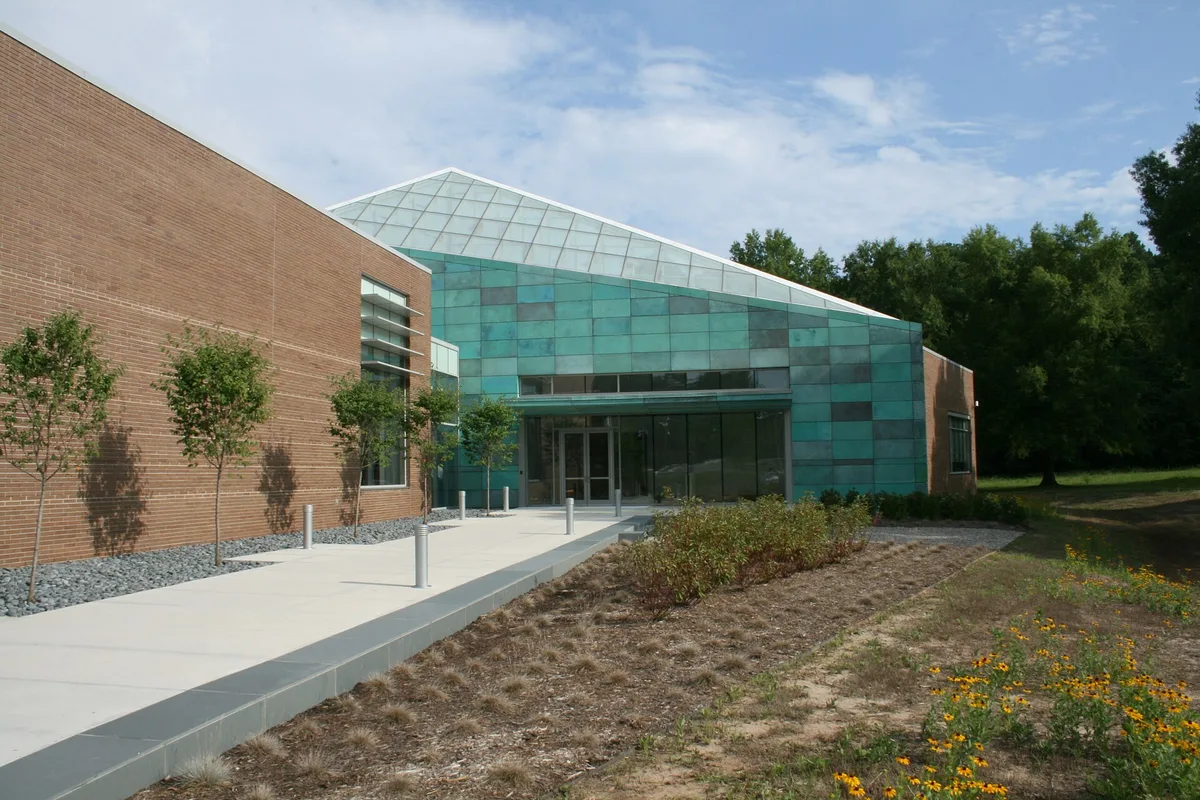
Research Triangle Park is a planned zone in North Carolina. It takes its name from the triangle drawn by three research schools: North Carolina State, Duke, and the University of North Carolina at Chapel Hill. Per Wikipedia's entry on the park, it covers 7,000 acres, hosts more than 300 firms, and counts about 65,000 workers. A private non-profit, the Research Triangle Foundation, owns and runs it.
The park sits among Raleigh, Durham, and Chapel Hill. The campuses lie close by. Staff, students, and ideas can move between them in minutes. That short drive is not a small thing. It turns a shared coffee into a shared project, and a shared project into a shared lab.
Built on Purpose, Not by Chance
After World War II, North Carolina's economy was weak. Its farms, mills, and furniture plants were losing ground. Teachers at the three schools proposed a park where research could grow and graduates could stay in the state. Romeo Guest first used the name Research Triangle in 1953. Governor Luther Hodges backed the plan in 1956.
Cash had to be raised before land could be bought. Archibald Davis moved the plan to a non-profit model. He then raised 1.425 million dollars in gifts from North Carolinians, per Wikipedia's history of the park. The big break came in 1965. IBM and the Department of Health, Education, and Welfare announced new sites there. From then to the late 2000s, the park added six firms and 1,800 workers a year on average, as the park's record notes.
The Campus Cluster Effect
A science park is a built zone tied to a school, the state, or a research body. Its aim is to speed the flow of know-how and turn research into products, as Wikipedia's science park entry defines it. The first such park on a campus was Stanford Research Park, begun in 1951. Research Triangle Park followed in 1959 and grew into the largest in the land.
Being close does quiet work. IBM anchored the park for decades and had 11,000 workers there as of 2013, per Wikipedia's entry. Big drug and tech firms followed. In 1976, the three schools formed a joint group to build shared research sites. It helped seed bodies such as the North Carolina Biotechnology Center.
What Other Regions Can Learn
The Triangle did not win on geography alone. Two scholars, Link and Scott, have studied its growth. Their view, cited by Wikipedia, is that a risk-taking culture and strong leaders mattered most. Local backers courted new groups, kept the park near the schools, and put the community first, not quick profit. We covered a connected angle in Rubin Observatory's First Data Drop Delivered 11,000 New Asteroids.
The lesson travels well. A cluster needs anchor schools, patient money, and people who connect them. Parks elsewhere, from Sophia Antipolis in France to dozens of US campuses, copied parts of the formula with mixed results. The recipe, it seems, is culture as much as concrete.
Conclusion
The Research Triangle shows that clusters are built, not born. Three schools lent talent. State leaders lent cash and will. A non-profit held the land steady for decades. The result is a region where research, teaching, and trade feed each other. Any region that wants its own wave of new ideas can study the pattern. Start with strong schools. Add patient money. Then guard the ties between them. Readers following this should also see A 'Significant' Result Can Be Trivial. Effect Size Tells You Which..